Asphalt vs. Concrete Driveway: 2026 Cost Breakdown, Durability & Value
If you are comparing an asphalt vs. concrete driveway in 2026, the short answer is this: asphalt usually costs less up front and performs well in freeze-thaw climates when maintained properly, while concrete often costs more up front and can offer longer service life when installed and cared for correctly.
That does not mean one choice is automatically better for every home. Your driveway has to handle local weather, drainage, vehicle weight, snow removal, sun exposure, oil drips, and daily use. It also has to fit your budget now and your maintenance expectations later.
2026 Cost Snapshot: Asphalt vs. Concrete Driveway
For general 2026 planning, asphalt driveways are typically less expensive to install than concrete driveways. Most industry cost guides estimate asphalt installation at approximately $6–$9 per square foot, depending on whether the project is a new installation, replacement, or overlay.
Concrete driveways generally range from $8–$15 per square foot, with costs increasing for thicker slabs, decorative finishes, stamping, staining, exposed aggregate, reinforced concrete, or complex site preparation. Local labor rates, material availability, driveway size, drainage requirements, and site conditions will ultimately determine the final project cost.
Use those numbers as a planning context, not a quote. Your actual price can change based on driveway size, base condition, drainage, removal needs, local labor, material availability, access, slope, and whether repairs are needed first.
Upfront Cost vs. Long-Term Value
When homeowners search for an asphalt vs. concrete driveway, they often focus on installation cost. That is understandable, but it is only one part of the decision.
Asphalt generally has a lower upfront cost, and it can be repaired, crack-filled, sealcoated, and maintained in a practical way over its life. Concrete may have a higher installation cost, and while it can last a long time, repairs can be more visible, and replacement can be expensive when large sections fail.
The value question is not simply, "Which one lasts longer?" A better question is, "Which surface makes sense for my climate, budget, maintenance plan, and expectations?"
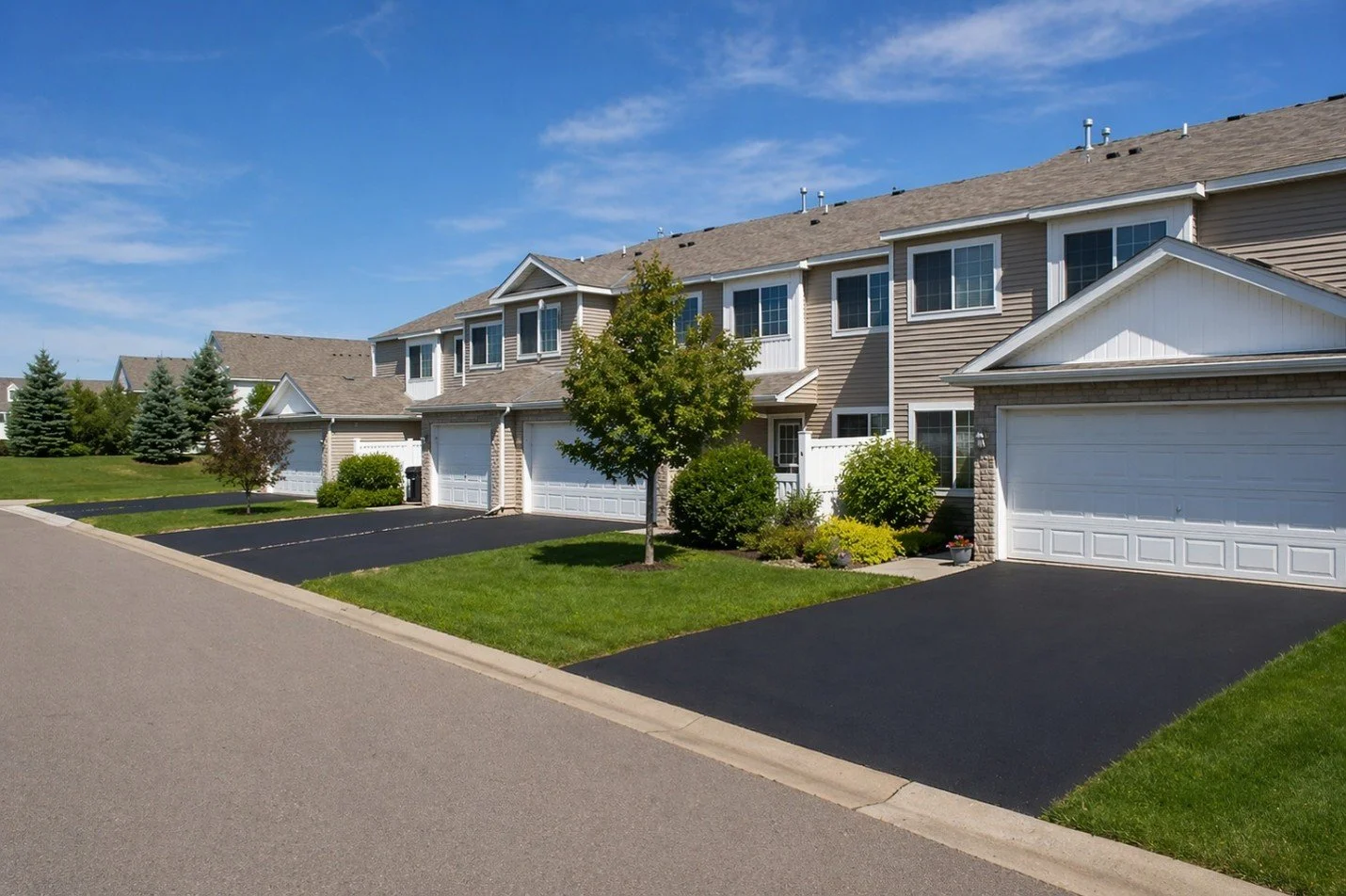
Once you've chosen asphalt, ongoing maintenance plays a key role in protecting that investment. Jet-Black helps homeowners and businesses extend the life and appearance of their asphalt surfaces through professional sealcoating services.
For most residential and commercial driveways, sealcoating is generally recommended every 2 to 3 years, depending on traffic levels, local climate, and the condition of the pavement. Although sealcoating does not repair structural damage, foundation issues, or significant sinking, it helps protect sound asphalt from moisture, UV exposure, oil spills, oxidation, and everyday wear.
Durability: What Each Surface Handles Well
Asphalt has a flexible character, which can be helpful in regions with freeze-thaw cycles. It is also easier to maintain through crack sealing, patchwork, overlays where appropriate, and sealcoating. When cracks appear, they should not be ignored. Water that enters cracks can widen damage, especially when it freezes and expands.
Concrete is rigid and strong. It can handle long-term use when installed on a proper base with the correct thickness and drainage. But concrete can crack, heave, scale, stain, and become difficult to spot-repair cleanly. In cold climates, salt and freeze-thaw movement can also create problems if the surface is not built and maintained properly.
Neither option is maintenance-free. Any contractor who suggests otherwise is skipping over reality.
Maintenance: The Real Difference Homeowners Feel
Asphalt maintenance is more active, but also more manageable. A strong maintenance plan may include cleaning, hot rubber crackfilling, sealcoating, patchwork, and apron or saw-cut repair when damage goes beyond surface protection. Jet-Black uses proprietary industrial-grade sealer and hot rubber crackfiller, with climate-specific additive blends by franchise territory.
Concrete maintenance usually includes cleaning, crack repair, joint care, and sealing when appropriate. It may not need the same kind of periodic blacktop sealcoating, but when concrete fails, the repair can be harder to blend.
This is where homeowners should be careful when comparing driveway sealing companies. A budget sealant can make asphalt look darker for a short time, but appearance is not the same as protection. Jet-Black's position is simple: sealcoating should protect your investment, not just dress it up for a weekend.
Climate: Why Location Changes the Answer
The best driveway material in Minnesota may not be the best answer in Florida, Colorado, New England, or the Midwest. Heat, snow, rainfall, salt use, soil movement, and freeze-thaw cycles all affect performance.
Jet-Black operates through locally owned franchises across 21 states, which is important because a driveway decision should not be made from a generic national script. Your local Jet-Black team understands the conditions in its territory and can recommend whether your asphalt needs sealcoating, crackfilling, patchwork, a sunken apron replacement, or another repair before protection work begins.
That local judgment matters more than a broad asphalt vs concrete driveway chart.
Curb Appeal and Resale
Both asphalt and concrete can improve curb appeal when they are installed and maintained well. Concrete can look clean and bright, especially with decorative upgrades. Asphalt has a deep, uniform finish when properly sealcoated and maintained.
But a clean-looking surface is not always a healthy surface. A driveway can look decent from the curb, while cracks, failed edges, drainage issues, or a sunken garage apron are already letting water reach the base. Jet-Black's maintenance approach is built around protection first. The improved appearance is a benefit, but it is not the whole job.
Choosing a Contractor: What to Watch For
If you are looking at driveway sealing companies, do not choose only by the lowest price. Ask what material they use, how they prepare the surface, how they handle cracks, whether they explain drying and curing clearly, and whether they are still going to be around if you have questions later.
Fly-by-night contractors often sell speed and a low price. A professional asphalt maintenance contractor should talk plainly about what sealcoating can do, what it cannot do, and whether your driveway needs repair before sealing.
Jet-Black has completed more than 500,000 jobs since its inception and more than 28,000 jobs in 2025 alone. That scale does not replace local care, but it does show that the process has been tested across many driveways, parking lots, and climates.
Honest Limitations Before You Decide
Sealcoating is not a structural repair. If your driveway has deep base failure, major potholes, a sunken garage apron, severe alligator cracking, or drainage problems, those issues need to be evaluated before sealant is applied.
You should also expect normal variation. Fresh sealcoat may show brush marks, slight texture differences, or color variation as it dries and cures. Weather, shade, humidity, and surface age can all affect the final appearance. A professional contractor should explain that up front.
FAQ Section
Is asphalt cheaper than concrete for a driveway?
In many markets, asphalt costs less up front than concrete. Final pricing depends on driveway size, base condition, removal, drainage, labor, and local material costs.
How often should an asphalt driveway be sealcoated?
Most residential and commercial asphalt surfaces should be sealcoated every 2 to 3 years, depending on traffic, climate, age, and surface condition.
Can sealcoating fix cracks or sinking?
No. Sealcoating protects the surface, but it does not correct structural damage. Cracks, holes, sunken aprons, and failed areas may need crackfilling, patchwork, saw-cut repair, or apron replacement first.
How should I compare driveway sealing companies?
Look for proven materials, clear surface preparation, honest limitations, local experience, strong reviews, and transparent quoting. Avoid contractors who sell sealcoating as a quick cosmetic fix.
Which Is Better?
The asphalt vs concrete driveway decision comes down to priorities.
Choose asphalt if you want a lower upfront cost, practical repair options, strong cold-weather flexibility, and a maintenance plan that can protect the surface every few years.
Choose concrete if you are comfortable with a higher upfront cost, want a lighter-colored hard surface, and are prepared for concrete-specific maintenance and repair realities.
If you already have asphalt, the better question may be whether your driveway is being protected correctly. A professionally maintained asphalt driveway can deliver strong value when cracks are handled early, sealcoating is done on schedule, and structural repairs are not ignored.
For a clear local recommendation, contact your local Jet-Black team.