
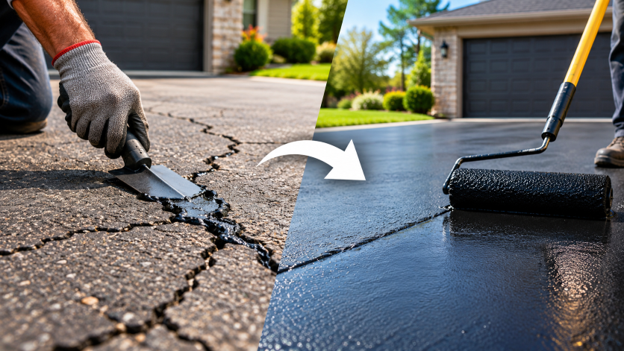
If your asphalt driveway has visible cracks, you might wonder whether sealcoating can cover them or if they need to be repaired first. You should repair asphalt cracks before sealcoating because sealcoat protects the pavement surface but does not fill or fix existing cracks. Applying sealer over damaged areas without proper preparation can leave the underlying problem unresolved.
Understanding the difference between crack repair and sealcoating helps you choose the right maintenance approach. Before comparing Sealcoating and Paving Options, it is worth knowing what your driveway needs, why cracks develop, and when professional repairs make sense.
Why Should You Repair Asphalt Cracks Before Sealcoating?
Asphalt cracks should be filled before sealcoating because they allow water to reach the layers beneath the pavement. Sealcoating creates a protective surface, but it is not designed to repair structural damage or bridge open cracks.
Small cracks may seem harmless at first. However, rainwater can seep through these openings and weaken the material beneath the asphalt. Changes in temperature can make the damage worse as the pavement expands and contracts. Over time, small cracks may widen, and water-related damage can lead to potholes or uneven sections.
Repairing cracks before applying sealer helps address these weak points. It also gives the sealcoating application a better-prepared surface to protect.
For homeowners, the main takeaway is simple: repair first, sealcoat second. The correct order helps prevent existing damage from being hidden beneath a fresh black finish.
What Happens If You Sealcoat Over Existing Cracks?
Sealcoating over open cracks does not solve the underlying problem and can leave the pavement vulnerable to further damage. A fresh coat may improve the driveway's appearance, but visible surface improvements do not necessarily mean the asphalt has been repaired.
Here are three problems that can occur when crack repair is skipped:
● Water can continue entering the pavement: Open cracks provide a path for moisture to reach the underlying layers, potentially weakening the pavement over time.
● Cracks may continue spreading: Temperature changes, vehicle traffic, and movement beneath the pavement can cause existing cracks to widen or new ones to develop.
● You may need more extensive repairs later: If damage progresses beyond the surface, filling individual cracks may no longer be enough to address the affected area.
Sealcoating works best as part of a maintenance plan that addresses existing damage before protecting the surface. If your driveway already has widespread cracking, crumbling edges, or depressions, a professional assessment can help determine whether crack filling alone is appropriate.
How to Tell Whether Your Asphalt Cracks Need Repair
The type and condition of the cracks help determine what repairs your driveway needs before sealcoating. Not every crack indicates serious pavement damage, but leaving open cracks untreated can allow water to enter the surface.
Consider these common types of asphalt damage:
1. Small, Isolated Cracks
Small cracks in an otherwise sound driveway may be suitable for crack filling before sealcoating. Addressing them early helps reduce water infiltration and prepares the pavement for surface protection.
2. Long or Interconnected Cracks
Cracks that connect across large sections of the driveway may indicate more widespread deterioration. These areas should be assessed before applying sealer to determine whether routine crack filling will be sufficient.
3. Alligator Cracking
Alligator cracking looks like a series of connected cracks that form small, irregular shapes resembling reptile skin. This pattern can indicate damage extending beyond the pavement surface. Sealcoating alone will not correct it, and the affected area may need more extensive asphalt repair.
4. Cracks Along Sunken or Uneven Areas
Cracks accompanied by dips, depressions, or sinking may point to problems beneath the asphalt. Filling the cracks and applying sealer will not correct the underlying movement. The damaged area needs to be evaluated to determine the appropriate repair.
A useful rule: If the driveway is generally sound and has a few isolated cracks, crack filling followed by sealcoating may be appropriate. If the pavement is breaking apart, sinking, or extensively cracked, investigate the underlying damage before deciding on the next step.
What Is the Correct Process Before Sealcoating?
A properly prepared asphalt driveway should have its existing cracks and other repair needs addressed before the sealcoat is applied. The exact process depends on the pavement's condition and the type of damage present.
A typical maintenance sequence includes the following steps:
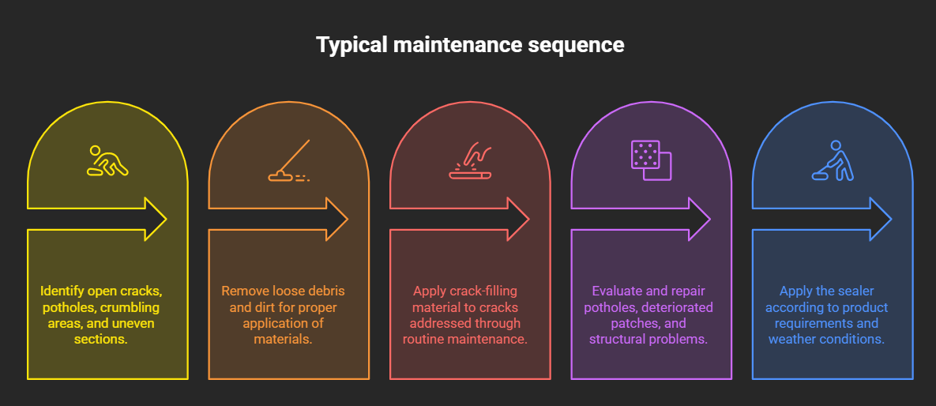
Step 1: Inspect the pavement. Identify open cracks, potholes, crumbling areas, and uneven sections. This helps establish whether the driveway needs routine maintenance or more extensive repairs.
Step 2: Clean the surface. Remove loose debris and dirt so the repair materials and sealer can be applied to a properly prepared surface.
Step 3: Fill suitable cracks. Apply an appropriate crack-filling material to cracks that can be addressed through routine maintenance. Larger or more complicated damage may require a different repair approach.
Step 4: Address other damaged areas. Potholes, deteriorated patches, and structural problems should be evaluated and repaired as needed before sealcoating.
Step 5: Apply the sealcoat. Once the necessary preparation and repairs are complete, apply the sealer according to the product requirements and suitable weather conditions.
Skipping preparation to finish the job faster can compromise the result. The goal is not simply to make the driveway look black again. It is to address existing damage and protect the remaining sound asphalt.
Sealcoating and Paving Options: Which One Does Your Driveway Need?
The right choice between crack filling, sealcoating, and asphalt replacement depends on the extent of the damage. Sealcoating is primarily a preventive maintenance treatment, while crack filling addresses openings in the pavement, and paving or more extensive repairs may be necessary for severely damaged areas.
| Asphalt condition | Potentially suitable approach | Why it matters |
|---|---|---|
| Sound asphalt with a faded surface | Sealcoating | Helps protect the surface and improve its appearance |
| A few isolated cracks | Crack filling, followed by sealcoating when appropriate | Addresses openings before surface protection |
| Potholes or localized deterioration | Asphalt patching or other suitable repairs | Repairs damaged pavement rather than covering it |
| Extensive interconnected cracks or sinking | Professional assessment and potentially more extensive repairs | Helps identify damage that routine maintenance cannot correct |
| Severely deteriorated asphalt | Evaluation for resurfacing or replacement | Determines whether the existing pavement can be repaired effectively |
These Sealcoating and Paving Options serve different purposes. The most suitable approach depends on the condition of the existing asphalt, the extent of deterioration, and whether the damage is limited to the surface.
Before choosing a service, ask the contractor to explain which repairs are needed and why. A fresh sealcoat should not be presented as a substitute for repairing damaged pavement.
Common Mistakes to Avoid Before Sealcoating
The biggest mistake is treating sealcoating as a repair solution rather than a protective maintenance step. Avoiding a few common errors can help you make better decisions about your driveway.
● Ignoring small cracks: Minor cracks can allow water to enter the pavement, so assess them before they become more extensive.
● Applying sealer over dirt and debris: Poor surface preparation can interfere with proper application.
● Choosing a contractor based only on price: Sealant quality, preparation, crack filling, and application methods all matter when comparing estimates.
● Expecting sealcoating to repair potholes: Potholes and deteriorated sections require appropriate repairs before the surface is sealed.
● Applying sealcoat at the wrong time: Weather and product requirements affect application and curing. Follow the contractor's guidance on suitable conditions and when the surface can be used again.
Jet-Black provides residential and commercial asphalt maintenance services, including crack filling, patchwork, and sealcoating. Its approach emphasizes professional-grade products and proper application rather than relying on a budget sealant to cover existing problems.
Protect Your Driveway by Repairing Cracks First
Crack filling and sealcoating work together, but they solve different problems. Filling suitable cracks before applying sealer helps address existing openings, while sealcoating protects the asphalt surface from everyday exposure and wear. If your driveway has potholes, interconnected cracks, or sinking sections, have the damage assessed before choosing a maintenance treatment.
Jet-Black has maintained driveways since 1987 and reports completing more than 500,000 jobs. Its residential and commercial asphalt maintenance services include crack filling, patchwork, and sealcoating using professional-grade products.
Not sure which service your driveway needs?
Contact Jet-Black for a free quote and ask about the appropriate repair and sealcoating approach for your asphalt.
Frequently Asked Questions
-
Yes, suitable asphalt cracks should generally be filled before sealcoating. Crack filling addresses openings that could allow water to reach the underlying pavement, while sealcoating protects the prepared surface. Extensive cracking or structural damage may require more than routine crack filling.
-
No, sealcoating is not a substitute for crack repair. It provides a protective coating over the asphalt surface, but it does not reliably fill open cracks or correct damage beneath the pavement. Have suitable cracks filled before applying the sealer.
-
The waiting period depends on the crack-filling material, the application method, weather conditions, and the manufacturer's instructions. Ask your contractor how long the repair material needs to set before sealcoating begins. Avoid assuming that every product is ready for coating after the same amount of time.
-
The decision depends on the extent and cause of the damage. Isolated cracks and localized deterioration may be repairable, while widespread cracking, sinking, or extensive structural problems may require more substantial work. A professional inspection can help determine whether repairs are appropriate or whether replacement should be considered.
-
Compare the condition of your asphalt with the purpose of each service. Sealcoating is suited to maintaining sound pavement, crack filling addresses suitable openings, and paving or more extensive repairs may be needed when the asphalt has deteriorated significantly. A contractor should explain the condition of your driveway and the reasoning behind the recommended work.