
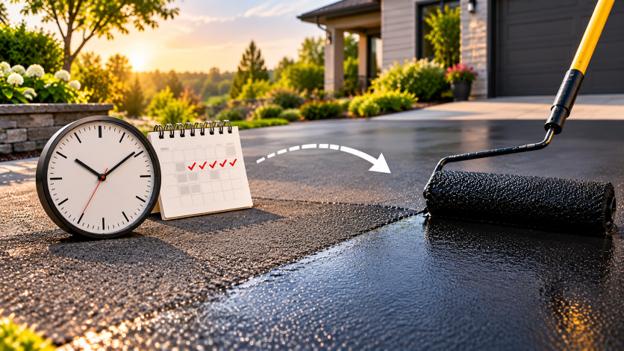
Fresh asphalt gives your driveway a smooth, dark finish, but it needs time to settle before you apply a protective sealcoat. Sealcoating too soon can interfere with the pavement's ability to cure properly. Waiting too long without a maintenance plan can also leave the surface exposed to weather and everyday wear.
So, how long should you wait before sealcoating new asphalt?
The answer depends on the condition of the pavement, the installation, and the guidance provided by your asphalt contractor. Understanding the timing helps you protect your investment and avoid applying a coating before the surface is ready.
How Long Should You Wait Before Sealcoating New Asphalt?
New asphalt generally needs time to cure and stabilize before sealcoating. Many contractors recommend waiting several months, often around 3 to 12 months, depending on the asphalt mix, weather, traffic, and installation conditions. However, you should confirm the appropriate waiting period with the contractor who installed your driveway.
Fresh asphalt contains binding materials that need time to settle as the pavement adjusts to its surroundings. Applying sealcoat before the surface is ready may affect how the coating adheres and performs.
Before scheduling the work, consider these factors:
● Installation conditions: The asphalt mix and how the pavement was installed can affect its readiness for sealcoating.
● Weather exposure: Sunlight, temperature changes, and rainfall influence how the surface ages and responds to maintenance.
● Driveway condition: The surface should be stable and suitable for the selected sealcoating product.
● Contractor recommendations: The installer can provide guidance based on the materials and conditions involved in the project.
The goal is to give the new pavement enough time to stabilize while planning maintenance before surface deterioration becomes a concern.
Why Does Timing Matter When Sealcoating New Asphalt?
Waiting for the right time helps ensure that sealcoating protects the asphalt rather than being applied before the pavement is ready. A sealcoat is a protective surface treatment, not a replacement for proper asphalt installation or curing.
Applying it too early may create problems with adhesion or the finished surface, depending on the materials and conditions. On the other hand, leaving asphalt unprotected for an extended period can expose it to sunlight, moisture, and regular vehicle traffic.
What Happens If You Sealcoat Too Early?
Sealcoating too early can affect the coating's performance if the asphalt has not stabilized sufficiently. The exact result depends on the pavement and the product used.
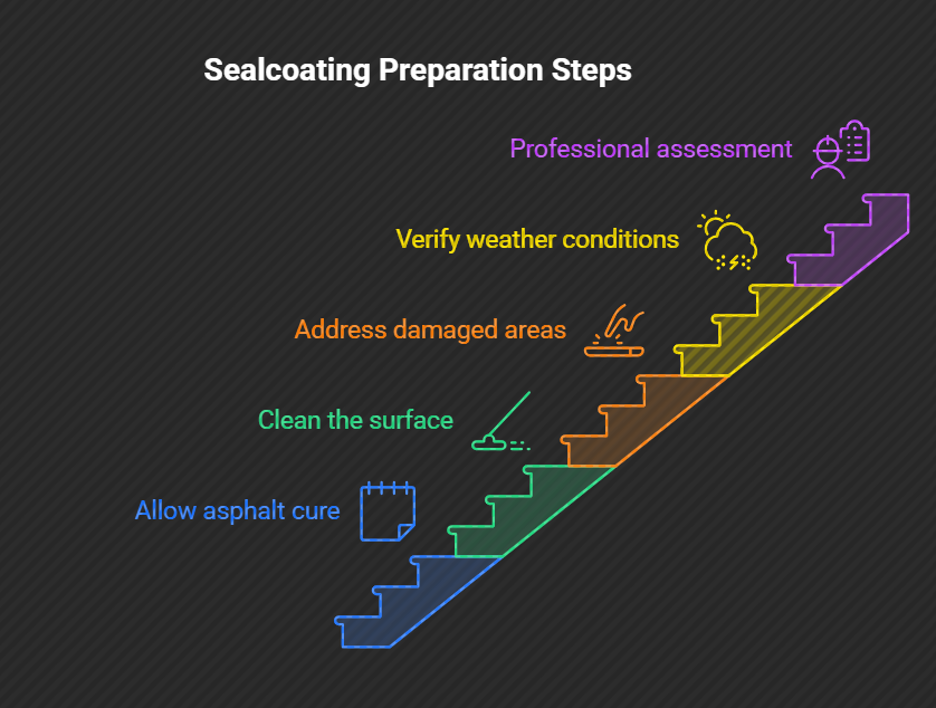
Before applying a sealcoat, make sure:
● The asphalt has had adequate time to cure according to the installer's recommendations.
● The surface is clean and free of loose debris.
● Any cracks or damaged areas have been evaluated and addressed.
● Weather conditions are suitable for the product being applied.
A professional assessment can help determine whether the driveway is ready or needs more time.
What Happens If You Wait Too Long?
Waiting beyond the recommended period does not automatically mean the driveway is damaged. However, asphalt that remains unsealed can experience surface oxidation, fading, and gradual wear from weather and traffic.
Inspect the driveway periodically for cracks, potholes, and areas where the asphalt is breaking apart. Small cracks may need filling before sealcoating, while more extensive damage may require separate repairs.
The right approach is to follow a maintenance schedule based on the pavement's actual condition rather than choosing a date without inspecting the surface.
How Long Does It Take Sealcoating to Dry?
The drying time depends on the product, temperature, humidity, sunlight, and airflow. Many residential sealcoating applications need approximately 24 to 48 hours before vehicle traffic can return, but some products and conditions require more or less time. Always follow the instructions provided by your contractor.
It is important to distinguish between asphalt curing and sealcoat drying. These are two separate stages:
● Asphalt curing and stabilization: This happens after the pavement is installed and before sealcoating is appropriate.
● Sealcoat drying: This happens after the protective coating has been applied and before the treated surface can be used.
Even when the surface looks dry, the coating may need additional time before it can handle vehicle traffic. Ask your contractor when it is safe to walk on the driveway, park vehicles, and resume normal use.
What Affects Sealcoating Drying Time?
Several conditions can change how quickly a fresh sealcoat dries.
●Temperature: Warmer conditions can help the coating dry, provided temperatures remain within the product's recommended range.
● Humidity: High humidity can slow moisture evaporation and extend drying time.
● Sunlight and airflow: Direct sunlight and good airflow may help drying, while shaded or poorly ventilated areas can take longer.
● Rain: Rain shortly after application can interfere with the coating before it has dried sufficiently. Contractors should schedule work around suitable weather conditions.
If you are wondering how long does it take sealcoating to dry before you can park in your driveway, do not rely on appearance alone. Confirm the recommended waiting period with the contractor who applied it.
What Should You Check Before Scheduling Sealcoating?
Before booking a sealcoating appointment, check whether your driveway needs any repairs. Sealcoating works best as part of a maintenance plan that addresses existing problems instead of covering them up.
1. Look for Cracks and Surface Damage
Inspect the driveway for open cracks, potholes, crumbling edges, and uneven sections. Small, isolated cracks may be suitable for crack filling, while more extensive damage needs further evaluation.
2. Check the Garage Entrance
Pay particular attention to the area where the asphalt meets the concrete at the garage. If the asphalt has sunk or developed deep holes along this junction, the problem may require more than routine crack filling.
Jet-Black's hot asphalt repair services include sunken apron replacements at locations where the service is offered. These repairs address damaged asphalt where the driveway meets the garage, including areas where holes may extend toward the garage foundation.
3. Determine Whether the Asphalt Needs Repair
Not every damaged driveway needs complete replacement. The appropriate solution depends on the extent of deterioration and what is happening beneath the surface.
Jet-Black offers several hot asphalt repair options at many locations:
● Hot asphalt repairs: These can replace damaged asphalt with hot asphalt rather than relying on standard cold patch materials.
● Sunken apron replacements: These address damaged or sunken asphalt at the garage entrance. The damaged section is cut out and removed so the holes and rock base can be properly repaired.
● Saw-cut repairs: These involve cutting out and replacing damaged asphalt in suitable areas of a driveway or parking lot.
● Overlay repairs: These may be appropriate in certain situations and can cost less than other repair approaches, although the result may look patchy and generally have a shorter lifespan.
The right repair depends on the condition of the pavement. For example, an overlay does not solve the underlying problem when a sunken apron has deep holes extending toward the garage foundation.
4. Prepare the Surface Properly
Before sealcoating, the asphalt should be cleaned and any necessary repairs completed. Applying a protective coating over loose debris, untreated cracks, or deteriorated pavement can leave existing problems unresolved.
A contractor should explain what preparation is needed and whether any damaged areas should be repaired before the sealcoat is applied.
How to Maintain New Asphalt After Sealcoating
Once your driveway has been sealcoated, following the contractor's instructions helps protect the new coating while it dries.
Keep these practical tips in mind:
● Wait before driving on the surface: Follow the contractor's recommended drying time before parking or using the driveway.
● Avoid early exposure to rain when possible: Sealcoating should be scheduled for suitable weather conditions, and the surface should be protected according to the product instructions.
● Inspect the driveway regularly: Look for cracks, potholes, and changes in the asphalt near the garage entrance.
● Address damage promptly: Filling suitable cracks and repairing damaged sections can help prevent water from entering the pavement.
● Plan future maintenance: The right schedule depends on the driveway's condition, traffic, weather exposure, and previous maintenance.
If you are comparing Sealcoating and Paving Options, remember that sealcoating protects suitable asphalt surfaces, while damaged pavement may need crack filling, patching, or more extensive repairs first.
Give Your New Asphalt the Right Start
New asphalt needs time to stabilize before sealcoating, and the correct waiting period depends on the installation and site conditions. Once the pavement is ready, proper preparation and timely repairs help ensure that the sealcoat is applied to a suitable surface. Remember that asphalt curing and sealcoat drying are different processes, so confirm both timelines before planning vehicle use.
If your driveway has deep holes, sinking near the garage, or damaged sections, address those issues before applying a protective coating. Jet-Black provides asphalt maintenance and hot asphalt repair services at participating locations, including sunken apron replacements and saw-cut repairs.
Need help deciding what your driveway needs?
Request a free quote from Jet-Black to discuss the condition of your asphalt and the appropriate next steps.
Frequently Asked Questions
-
New asphalt often needs several months before sealcoating, with many projects falling within a 3-to-12-month range. The appropriate timing depends on the asphalt mix, installation, weather, and pavement condition. Ask your installer when the surface will be ready for a protective coating.
-
Sealcoating commonly needs around 24 to 48 hours before vehicle traffic can return, although drying times vary by product and weather conditions. Follow your contractor's instructions instead of relying on a general estimate. A surface that looks dry may still need additional time before it can handle vehicles.
-
A few weeks may be too soon for many new asphalt driveways. The pavement needs adequate time to cure and stabilize before a sealcoat is applied. Confirm the recommended waiting period with your installer and the sealcoating contractor.
-
Yes, suitable cracks should generally be repaired before sealcoating. Sealcoat protects the surface but does not correct open cracks, potholes, or underlying structural problems. If the driveway has significant cracking or sinking, have it assessed before scheduling the coating.
-
Sealcoating alone will not correct a sunken area near the garage. Deep holes at the asphalt and concrete junction may extend toward the garage foundation and require an apron replacement. Jet-Black offers sunken apron replacement services at many locations, subject to local service availability.